The Centre on Constitutional Change is a leading hub for the comparative study of territorial politics and governance in the United Kingdom and beyond.
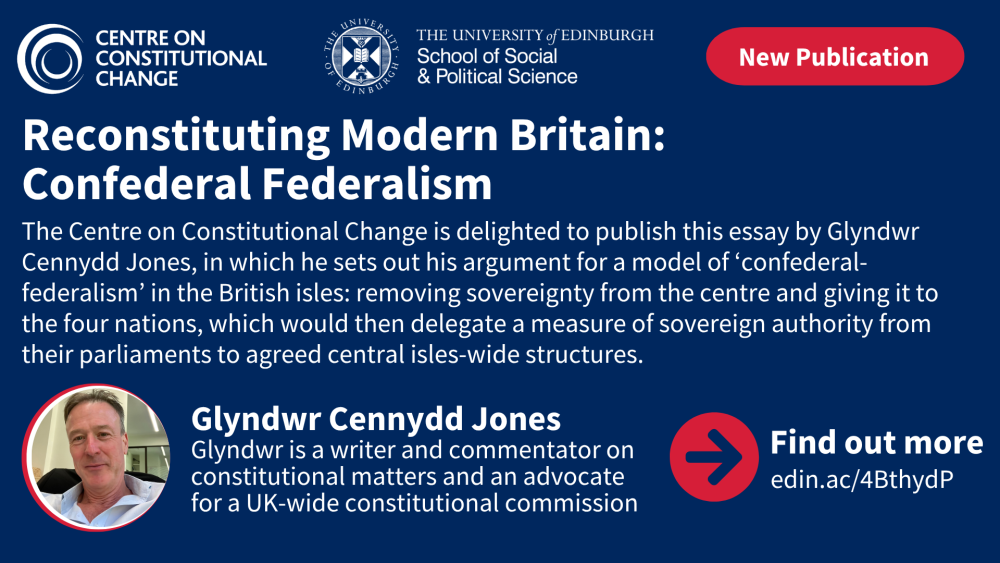
The Centre on Constitutional Change is delighted to publish this essay by Glyndwr Cennydd Jones, in which he sets out his argument for a model of ‘confederal-federalism’ in the British isles: removing sovereignty from the centre and giving it to the four nations, which would then delegate a measure of sovereign authority from their parliaments to agreed central isles-wide structures.
What explains regional differences in research and development expenditure? Juan A. Román-Aso, Fernando Coca Villalba, and Irene Bosch Frigola examine regions across Southern Europe, finding that institutional quality, particularly the impartiality of public administration, is positively associated with R&D spending.
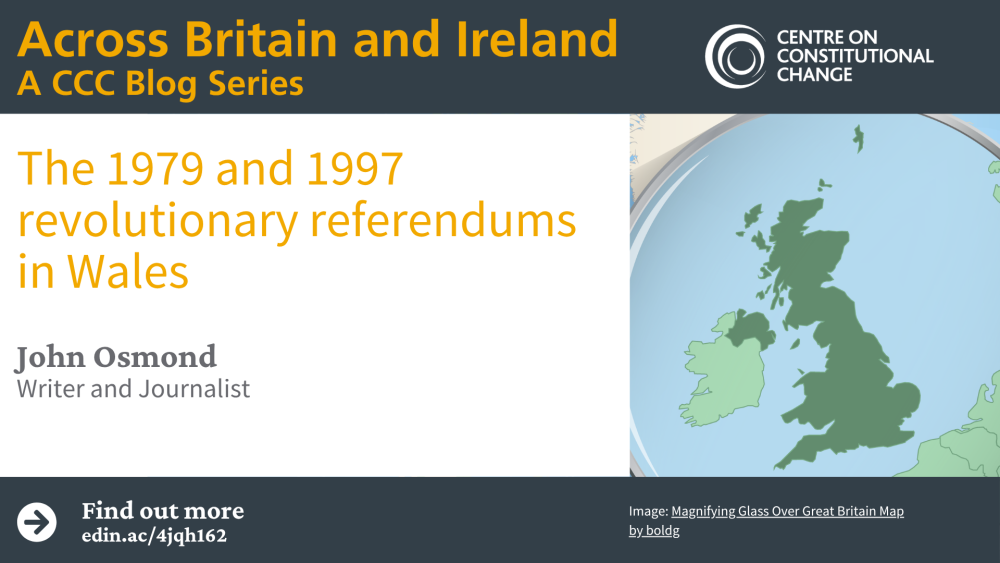
John Osmond writes on the 1979 and 1997 referendums in Wales and on his recently published documentary novel which covers this period.
Fiscal decentralisation promises to bring government closer to citizens and reduce regional inequalities, but its success depends on the institutions receiving these powers. Drawing on departmental data from Colombia between 2005 and 2020, Jaime E. Ávila-Álvarez, Beatriz Cuadrado-Ballesteros, and Jennifer Martínez-Ferrero examine how armed conflict and corruption undermine these ambitions, allowing public resources to be captured by armed groups and local elites.
Regional & Federal Studies invites paper proposals for its first conference, bringing together scholars working across the journal’s broad field of federalism, regionalism and territorial politics
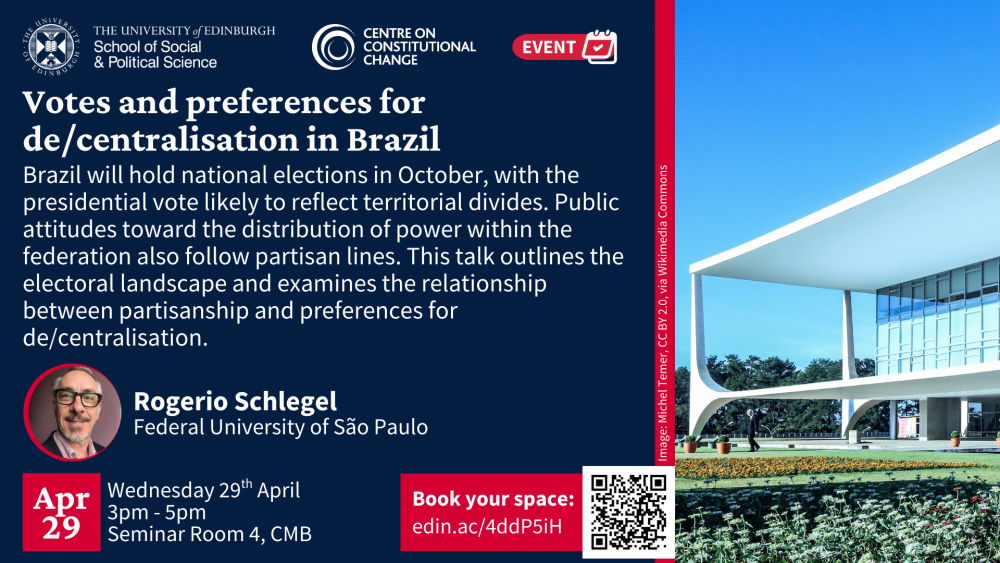
This talk outlines the electoral landscape of Brazil & examines the relationship between partisanship and preferences for de/centralisation
The Centre on Constitutional Change, in collaboration with Regional & Federal Studies, is hosting a workshop broadly exploring territorial governance, politics, and policies in Scotland and Wales; within UK and subnational developments, and comparative international perspectives are also welcome.
Join Ryan Griffiths to discuss his book 'The Disunited States: Threats of Secession in Red and Blue America and Why They Won’t Work'
This website uses Google Analytics to gather usage statistics. Please accept or reject. See our privacy policy.