The Centre on Constitutional Change is a leading hub for the comparative study of territorial politics and governance in the United Kingdom and beyond.
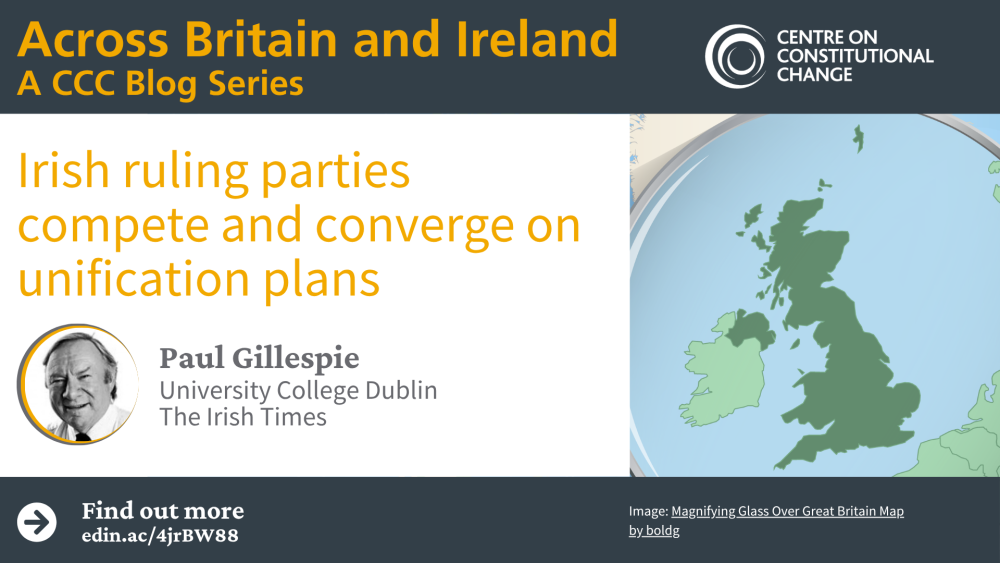
The dynamics of coalition inter-party politics in the Republic have produced a significant new public discussion on the possibility of Irish unification and how the Irish state should prepare were it to happen.
In this blog, Dr Hayley Bennett, draws attention to the multi-level complexities of social security and employment support policies, and reflects on just two aspects of the report that policymakers in Scotland might need to consider.
The Centre on Constitutional Change is delighted to publish this essay by Glyndwr Cennydd Jones, in which he sets out his argument for a model of ‘confederal-federalism’ in the British isles: removing sovereignty from the centre and giving it to the four nations, which would then delegate a measure of sovereign authority from their parliaments to agreed central isles-wide structures.
What explains regional differences in research and development expenditure? Juan A. Román-Aso, Fernando Coca Villalba, and Irene Bosch Frigola examine regions across Southern Europe, finding that institutional quality, particularly the impartiality of public administration, is positively associated with R&D spending.
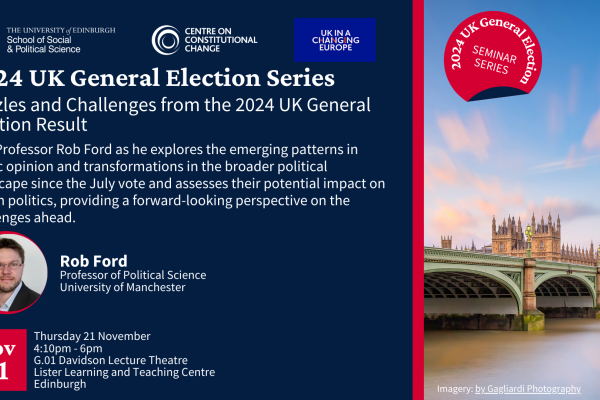
In this session, Professor Rob Ford will reflect on the surprising elements and long-term implications of the 2024 UK General Election.
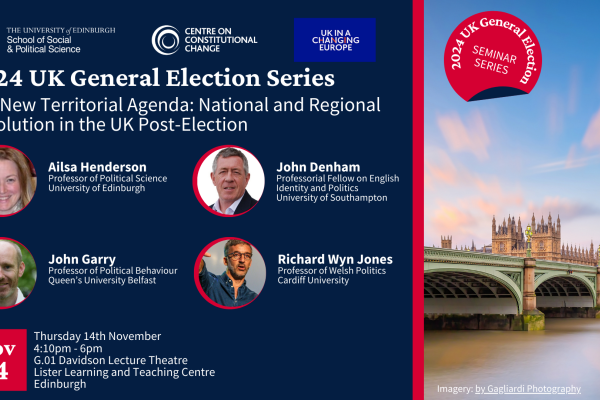
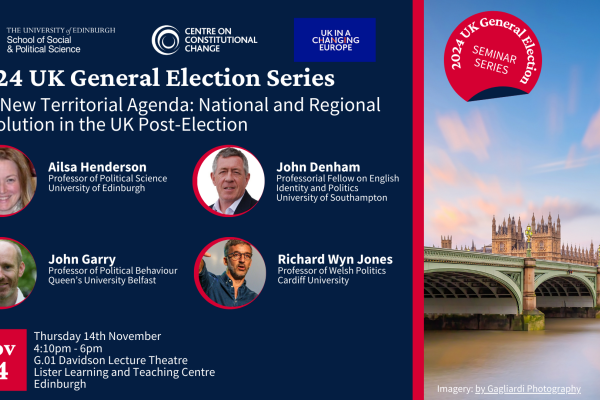
This panel will explore the evolving landscape of devolution in the UK following the 2024 general election. The discussion will focus on recent developments in Scotland, Wales, and Northern Ireland, as well as the potential for further devolution in England and the role of metro mayors.
This session will explore the composition of the newly elected UK Parliament, focusing on key aspects of representation, including gender balance, ethnic diversity, and disability representation. The discussion will examine…
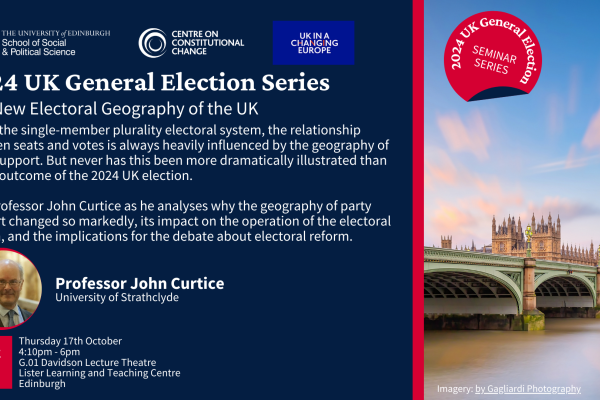
Under the single-member plurality electoral system, the relationship between seats and votes is always heavily influenced by the geography of party support. But never has this been more dramatically illustrated…
This website uses Google Analytics to gather usage statistics. Please accept or reject. See our privacy policy.