The Centre on Constitutional Change is a leading hub for the comparative study of territorial politics and governance in the United Kingdom and beyond.
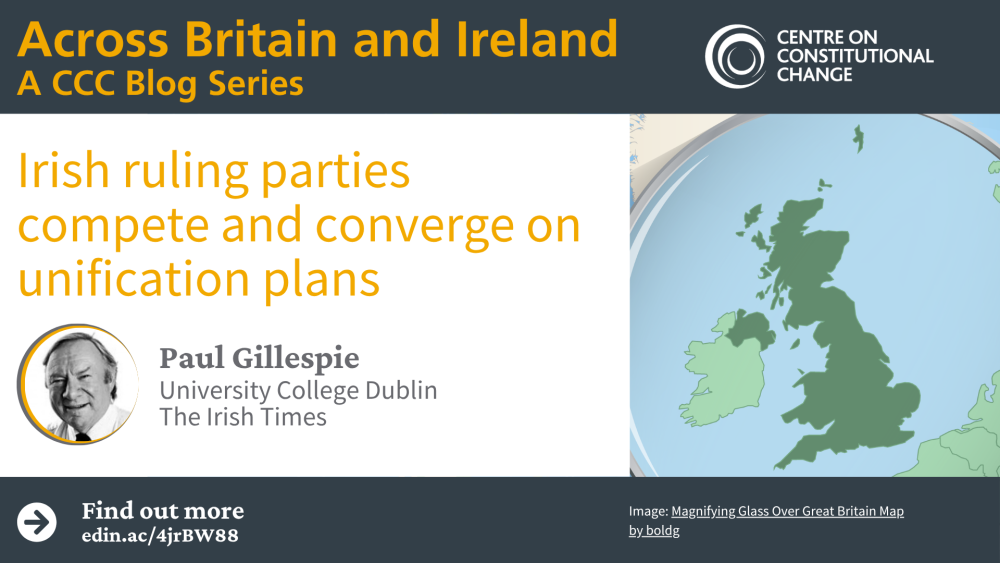
The dynamics of coalition inter-party politics in the Republic have produced a significant new public discussion on the possibility of Irish unification and how the Irish state should prepare were it to happen.
In this blog, Dr Hayley Bennett, draws attention to the multi-level complexities of social security and employment support policies, and reflects on just two aspects of the report that policymakers in Scotland might need to consider.
The Centre on Constitutional Change is delighted to publish this essay by Glyndwr Cennydd Jones, in which he sets out his argument for a model of ‘confederal-federalism’ in the British isles: removing sovereignty from the centre and giving it to the four nations, which would then delegate a measure of sovereign authority from their parliaments to agreed central isles-wide structures.
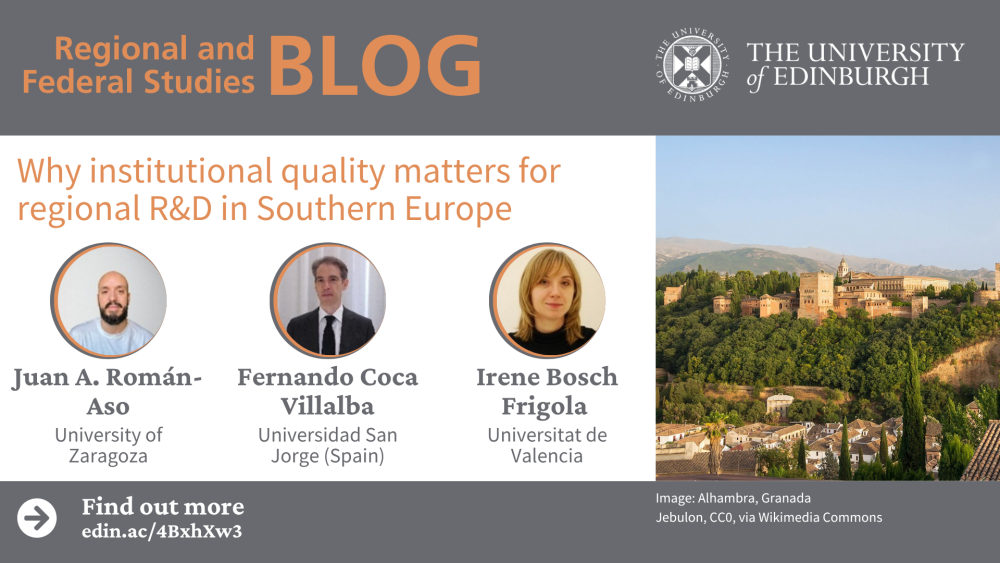
What explains regional differences in research and development expenditure? Juan A. Román-Aso, Fernando Coca Villalba, and Irene Bosch Frigola examine regions across Southern Europe, finding that institutional quality, particularly the impartiality of public administration, is positively associated with R&D spending.
This webinar will bring together Academics Stand Against Poverty UK election auditors with academics from Wales and Scotland to discuss current challenges in relation to poverty and flourishing, reflecting on the post General Election period and looking ahead to the Devolved Parliament elections.
Join Dr. David Rogers, the former Constitution and Cabinet Director at the Scottish Government, for a talk and Q&A session
An opportunity for academics and researchers broadly interested in spatial inequalities to share their research expertise
This event explores whether German federalism still offers useful lessons for Scotland and the UK. It will consider how Germany's system of territorial governance has evolved, what challenges it now faces, and how this experience might inform ongoing debates about devolution, democracy, and reform in Scotland and the wider UK.
This website uses Google Analytics to gather usage statistics. Please accept or reject. See our privacy policy.